Ducted Air Conditioning Filters: How Often to Clean Them and What It Costs

Clean the return air filter on your ducted system every 3 months; do it every 6 to 8 weeks if you have pets indoors, allergies in the house, or you have just finished a renovation. Book a full service once a year to cover the coil, the condensate drain and the refrigerant pressures. The filter is the part you can safely do yourself.
Every summer, our technicians open the same grille in the same hallway and find the same thing. A filter that has not been touched since we were last there, carrying a mat of dust, pollen and pet hair thick enough to peel off in one piece.
We have installed more than 3,500 ducted systems across Sydney since 2018, from the Hills District to the Sutherland Shire, and the filter is still the most neglected part of the whole system. It is also the cheapest thing to fix.
Here is how often to clean it, how to do it properly, what it costs, and where the DIY job stops.
Where are the filters on a ducted air conditioning system?
On almost every ducted system in a Sydney home, the filter sits behind one large return air grille in the ceiling. Usually in a hallway, sometimes in a living area or at the top of the stairs.
Air is pulled through that grille, passes through the filter, and travels through the ductwork to the indoor unit in the roof. If you want the full picture of how that air path works, read our page on how ducted systems work.
Two things surprise people.
First, most homes have one filter, not a filter at every vent. The small round diffusers in your bedrooms are outlets, not intakes. There is nothing behind them to clean.
Second, the filter is not the only thing collecting dust. Behind it sits the indoor coil, and a neglected filter pushes dust straight onto that coil, where it sticks to the fins and quietly costs you money every time the system runs.
Return air filter or duct filter?
Both phrases mean the same filter in most Australian homes. “Return air filter” describes where it sits, in the return air path. “Duct filter” is what people call it when they are shopping for a replacement. If your system has additional inline filtration, it will be listed in the manual, and it is not something you should go looking for yourself.
How often should you clean ducted air conditioning filters?
Every 3 months. Four times a year, at the change of each season, is the rhythm that suits most Sydney homes.
However, the real answer depends on what your house is doing to the air.
Manufacturer guidance sits on both sides of it. Daikin, quoting Energy Star, suggests cleaning or replacing filters monthly through peak summer and winter and at the start of each season the rest of the year. Midea suggests every 3 to 6 months.
Our quarterly recommendation sits between the two, because Sydney adds its own load: pollen from September, dust from older roof cavities, and salt air in the coastal suburbs.
| Household Situation | Filter Clean | Full Service |
|---|---|---|
| Standard Sydney home, no pets | Every 3 months | Annually |
| Pets indoors | Every 6 to 8 weeks | Annually |
| Allergy or asthma in the household | Every 6 to 8 weeks | Annually, plus a coil clean |
| Near a main road, or an older home with attic dust | Every 2 months | Annually |
| Coastal suburb, salt air | Every 2 months, check for corrosion | Annually |
| Just finished a renovation | Immediately, then monthly until the dust settles | Before you use the system again |
- Spring pollen. From September through November the filter collects pollen before it collects anything else. If hay fever in your house gets worse when the aircon runs, check the filter first.
- Roof cavity dust. Older homes through the Hills District and the Sutherland Shire often have loose insulation and decades of dust sitting above the ceiling. Every time the system starts, a little of it gets pulled through.
- Salt air. In the coastal suburbs, humidity and salt speed up corrosion on the filter frame and the coil behind it. Clean more often, and look at the frame while you are in there.
How to clean ducted air conditioning filters (10 minute job)
Turn the system off at the wall first. Not the remote, the wall. Then follow these seven steps.
- Switch off at the wall and wait for the fan to stop. Done looks like silence and a blank controller. Working on a running system pulls dust into the coil and can trip the unit.
- Open the return air grille. Most have clips or turn latches on the sides. Some have a pin you undo by hand. Done looks like the grille swinging down and staying down.
- Slide the filter out slowly, with a towel underneath. Dust will fall. A hand under the middle saves you a cleanup. Done looks like the filter out and the duct opening still clean.
- Vacuum the intake face first, with a soft brush on low suction. The side facing the room holds the loose dust. Midea advises against vacuuming at all while Daikin recommends washing, so check your manual. On most mesh filters, a gentle vacuum then a rinse is the safest combination. Done looks like no loose dust left to turn into mud.
- Rinse in lukewarm water. Washable mesh and synthetic media only. Never use hot water, detergent, a stiff brush or a pressure washer, because all four damage the media and a damaged filter passes dust. Done looks like clear water running through and the colour of the filter visible again.
- Dry it completely in the shade. Not in direct sun, not on a heater. Done looks like a dry filter with no damp patches. Refitting a damp filter is how mould gets started, and it is the most common mistake we see.
- Refit and close the grille. If the filter has airflow arrows, they go back the same way they came out. Done looks like a filter sitting flat with no gaps at the edges and a grille that latches shut.
Never run the system with the grille off for more than a few minutes. It will pull unfiltered air, and whatever is in your ceiling will end up on the coil.
If the filter is torn, stiff, discoloured or still grey after washing, replace it rather than refit it.
Cleaned the filter and the system still is not right? Book a ducted service and we will check the parts you cannot see.
Daikin, Fujitsu, Actron and Mitsubishi: What changes between brands?
The access method is nearly always the same. The filter media and the way your controller reminds you are not.
| Brand | Where the Filter Is | What is Worth Knowing |
|---|---|---|
| Daikin | Behind the return air grille | The range uses both washable polyester media and rigid resin filters, and Daikin runs an after sales line for replacement parts |
| Fujitsu | Behind the return air grille | Washable mesh on most residential ducted installs. Confirm your model before you wash it |
| Actron Air | Behind the return air grille | Australian brand, common in Sydney new builds. Check the frame type before you pull the filter out |
| Mitsubishi Electric | Behind the return air grille | Some controllers show a filter sign when the system wants attention. Clear it after cleaning, not before |
Filter media comes in different grades and thicknesses. A filter that is too dense restricts airflow through the whole system, and a restricted system runs longer, uses more power, and can freeze the coil on a hot day. If you are replacing media rather than washing it, match what came out of the grille, or ask.
Daikin publishes its own guidance on cleaning and replacing filters, and Midea has a step by step for ducted systems. Two minutes on either is time well spent before you touch anything.
If you are choosing a system rather than cleaning one, our comparison of the best ducted air conditioning brands in Australia covers that separately.
Should you clean your filters or replace them?
Three situations, three answers.
- Washable media. Clean it. Most ducted systems in Sydney use washable mesh or synthetic media that will last years if you rinse it quarterly and let it dry properly.
- Disposable media. Replace it. Some ducted systems, including a few with cardboard framed filters, are designed to be thrown away rather than washed. Washing destroys them.
- Damaged, sagging or permanently grey media. Replace it. A filter that no longer sits flat, or has lost its shape, is letting air past the edges instead of through the media. That is the same as having no filter at all.
Replacement media costs less than most people assume. A single filter is usually cheaper than a takeaway dinner, which is why we tell people to keep a spare rather than put the swap off for another season.
Do I need a HEPA filter in a ducted system?
Sometimes, and not as an impulse upgrade.
A HEPA grade filter traps far finer particles than standard media, which is genuinely useful in a household with asthma or severe allergies. The catch is static pressure. A dense filter the system was not designed for strangles airflow, and you end up with cleaner air that never reaches the back bedroom.
If you want filtration above standard, have the system’s static pressure checked first. If it cannot take it, a clean return and a coil clean will do more for your air than a filter your fan cannot push through.
Filter cleaning vs duct cleaning: Which one do you actually need?
Most Sydney homes simply need their filters cleaned and their coil checked.
Duct cleaning is a separate job with separate equipment, and it is worth doing when:
- dust visibly blows out of the vents when the system starts
- the house has just been renovated, or floors have been sanded
- the filter was missing, damaged or badly neglected for a long stretch
- vermin have been in the roof space
- someone in the house has allergies that flare whenever the aircon runs
- there is a musty smell that comes back after a filter clean
If none of those apply, a duct clean is money you do not need to spend. We would rather say that than sell you one you did not need.
Can mould grow in ducted air conditioning ducts?
Yes. Cooling pulls moisture out of the air, and that moisture collects on the coil and runs into the drain tray. If the drain is partly blocked, the tray holds water, or a filter is refitted damp, you have created exactly what mould needs.
The most common cause we find is a damp filter put back too early. The second is a blocked condensate drain. Both get picked up in a service, and neither is fixed by spraying anything into a vent.
When filter cleaning is not the problem
Five signals mean stop and call someone:
- Ice on the outdoor unit or the refrigerant lines. Usually low refrigerant or restricted airflow, and not something a rinse will fix.
- Water pooling near the return grille, or a stain on the ceiling. The condensate drain is blocked or the tray is overflowing. This one gets worse quickly.
- A musty smell that comes back within days of cleaning. If it returns that fast, the filter was not the source.
- Short cycling. The system starts and stops every few minutes without reaching temperature.
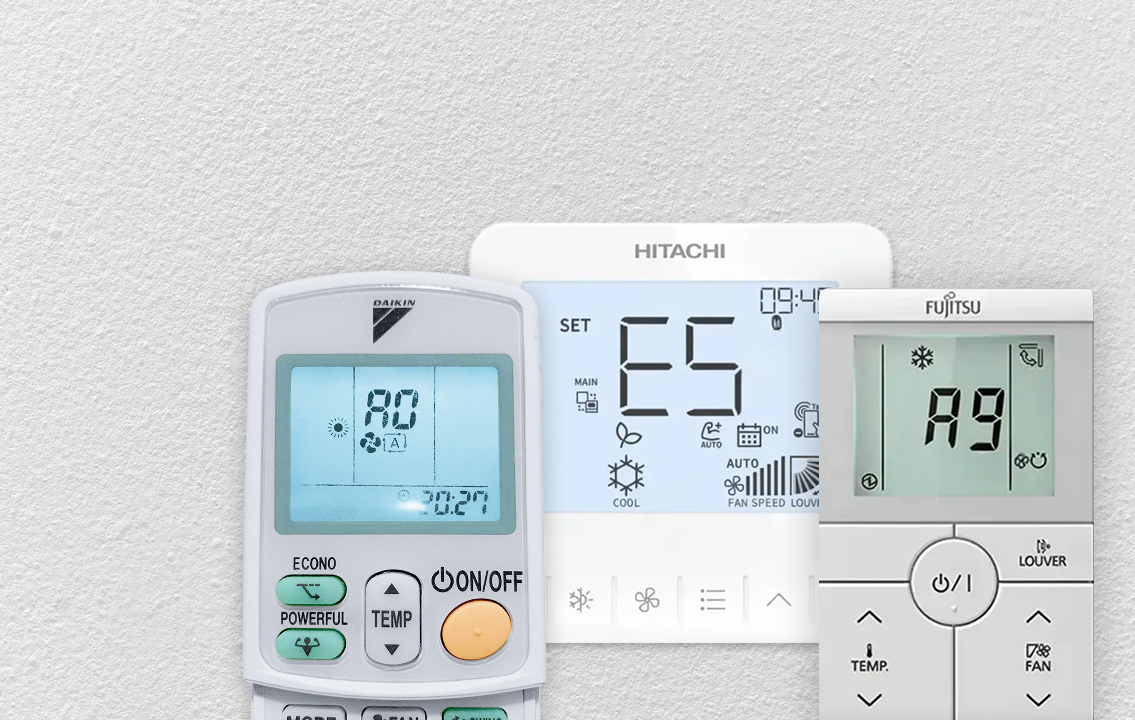
- An error code on the controller. Look it up rather than guess. Our Hisense error code library shows how to read a code before you call, and we keep libraries for the other major brands too.
If any of those are happening, get a fixed price quote and we will tell you what it actually is.