Ducted Air Conditioning
Discreet, powerful, and whole-home comfort for your Sydney property. Experience seamless cooling and heating, perfectly integrated.

What is Ducted Air Conditioning?
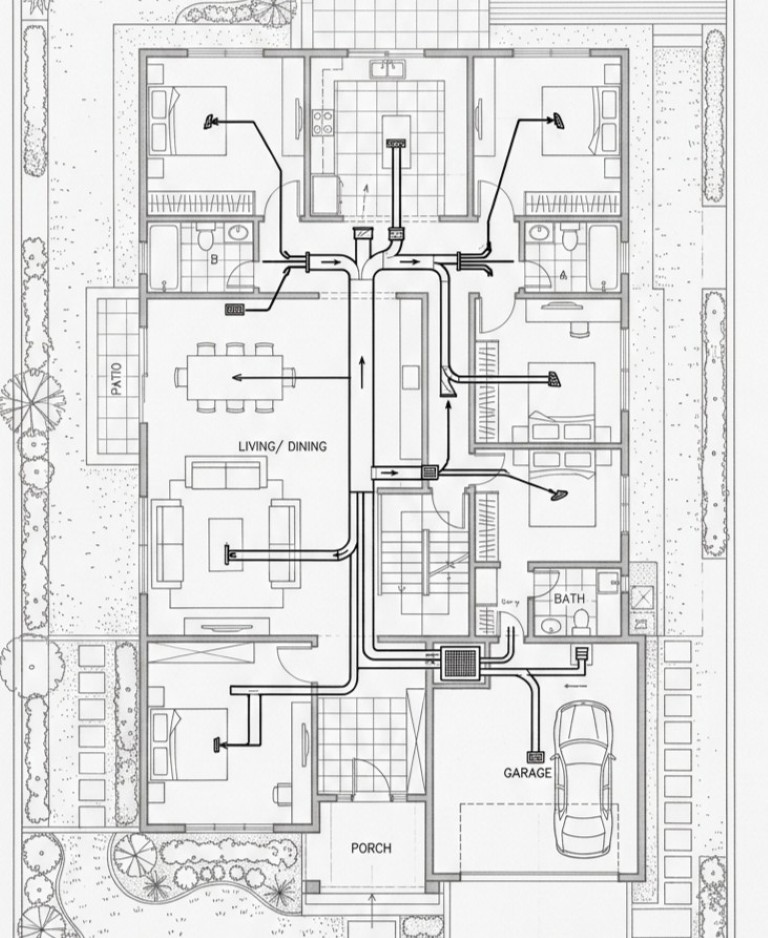
A ducted air conditioning system uses a central unit installed in your roof cavity to push conditioned air through a network of insulated ducts and into every room via ceiling vents. It’s one AC system for the whole home. The compressor and most of the hardware stay hidden above the ceiling, so from inside, all you see are slim flush-mounted vents.



How does a ducted AC system work in practice?
- The central unit is in your roof cavity; it draws in air, conditions it, and pushes it out through the duct network.
- The ductwork runs through the ceiling space to each room or zone you want to control, and it’s fully insulated to maintain high AC efficiency.
- Ceiling vents blend in with the rest of your ceiling and deliver conditioned air quietly into each room.
- The return air grille draws air back to the central unit to be re-conditioned, keeping the cycle running efficiently.

How Ducted Air Conditioning Differs From Split Systems
A split system air conditioning unit handles one room, a multi-split AC system handles a few rooms with separate indoor heads on each wall, and a ducted AC system handles your entire home through a single concealed unit with no visible wall hardware at all.
The trade-off is upfront cost and installation complexity. Ducted systems cost more than a single split system, but when you’re regularly cooling or heating four or more rooms, the cost comparison shifts.
Running four separate split systems draws more power and creates four separate maintenance obligations compared to one ducted system managed centrally.

Who is ducted air conditioning suited to?
Ducted systems suit:
- Homes with four or more rooms to condition regularly
- New builds and renovations where ductwork can be planned into the structure from the start
- Homeowners who want an invisible AC system, with no wall units to affect the look of each room
- Properties in Sydney’s climate where you need cooling in summer and heating in winter
A ducted AC system is less suitable for small apartments or single-room applications. For rooms like that, a split system is the more practical and cost-effective option.
Is Ducted Air Conditioning Worth It?
The honest answer: for the right home, yes. For the wrong home, not necessarily.
A ducted system costs more upfront than a single split-system AC; however, comparing a ducted system to one split system is the wrong comparison. Most Sydney homes needing whole-home comfort are looking at 4–6 rooms. At that scale, you’re either buying multiple split systems or one ducted system.
Running multiple split systems means multiple sets of filters to clean, multiple services to book, remotes to manage, and individual wall units visible in every room.
A ducted system gives you one central controller, one annual service visit, and nothing on the walls at all.

Upfront cost vs long-term value
Ducted systems are a long-term asset. A well-installed system typically lasts 15 to 20 years, and over that period the cost-per-year of comfort is substantially lower than most people expect when they first see the quote.
Inverter technology also means the system uses only the energy it needs to hold a set temperature, rather than cycling on and off at full power. Combined with zoning, you’re only conditioning the rooms actually in use, which keeps running costs manageable.
Do any of those apply? Our team can recommend the right AC system for your situation during a site inspection.
When ducted AC might not be the right call
Ducted air conditioning isn’t the right answer for every situation. It may not suit you if:
-
- Your home has no accessible roof cavity (some low-pitch or flat-roof properties need alternative solutions)
- You only need to condition 1 or 2 rooms
- You’re renting and can’t modify the property
- Your budget requires a staged approach, where a split system in key rooms now makes more practical sense
Do any of those apply? Our team can recommend the right AC system for your situation during a site inspection.
Ducted Air Conditioning Installation Sydney
Getting a ducted AC system installation right starts with the design stage, and that determines everything: how many zones, what size unit, where the indoor head sits, how the duct runs are routed.
- Installation consultation. We visit the property, assess the roof cavity, measure the space, and talk through how you use your home.
- Custom system design. Based on the site visit, we specify the right system capacity, number of zones, duct routing, and controller type.
- Professional installation. All installation work is carried out by our licensed air conditioning technicians.
- Commissioning and handover. Once the system is running, we test every zone, check airflow, and walk you through how to operate and maintain it.
Are you planning a new build or renovation?
Our team can work directly with your builder or architect to coordinate duct routing around structural elements before the ceiling is closed. Explore our construction air conditioning service to learn how we handle those projects.
What’s included in a Paragon ducted AC installation?
When you get a quote from Paragon, the price covers the full scope of the job:
- Site inspection and custom system design (zones, capacity, duct routing)
- Supply of the indoor and outdoor units
- Full ductwork installation, including insulated flex duct and ceiling vents
- Electrical connection and commissioning
- Post-install walkthrough so you know how to operate and look after the system
- Compliance documentation where required
How long does ducted air conditioning installation take?
Most standard residential ducted installations take 1 to 2 days. That covers the full scope: indoor unit in the roof, outdoor unit installed externally, all ductwork run and connected, vents fitted, electrical connected, and the system commissioned and tested.
What adds time?
- Multi-level homes
- Tight or obstructed roof cavities
- High zone counts
- Retrofit installations for existing homes
Can ducted air conditioning be installed in an existing home?
Yes, in most cases. The key requirement is an accessible roof cavity with enough space to house the indoor unit and run ductwork to each zone. Most Sydney homes with a pitched roof and accessible ceiling space are suitable for a retrofit ducted installation.
It’s less straightforward for:
- Flat-roof or skillion-roof properties with no ceiling cavity
- Homes with very low roof pitch where the indoor unit physically can’t fit
- Concrete slab ceilings (common in some apartment buildings)
Unsure whether your home is suitable? A site inspection is the fastest way to get a definitive answer.

UltraSlim Ducted Systems
The UltraSlim is the go-to solution for single-storey homes with limited cavity clearance, townhouses, and retrofits where space is constrained.
- Best for: Tight or low roof cavities, townhouses, retrofit installs where clearance is limited
- Capacity range: 7.10kW – 17.00kW
- Zoning: Compatible with ActronAir controllers
- Warranty: 5 years

Advance Ducted Systems
The Advance is suited for homes with higher-capacity needs. It sits above the UltraSlim in capacity and is the most common choice for 4- to 5-bedroom homes running four or more zones.
- Best for: 4-5 bedroom homes with good roof access, multi-zone setups
- Capacity range: 12.20kW – 21.55kW
- Key difference from UltraSlim: Larger physical footprint, higher capacity ceiling, suited to homes where size isn’t the constraint
- Zoning: Compatible with ActronAir controllers
- Warranty: 5 years

Neo Ducted Systems
The Neo sits at the top of the range and is the right choice when you want the most from your system, including compatibility with smart home controls and the highest efficiency ratings in the lineup.
- Best for: Premium builds, larger homes, buyers who want smart zoning and top-tier efficiency
- Capacity range: 10.0kW – 25.0kW
- Key difference from Advance: Higher efficiency rating, advanced smart control compatibility, premium feature set
- Zoning: Compatible with MyAir smart zoning
- Warranty: 5 years
Daikin Ducted Systems
As authorised Daikin dealers, Paragon supplies and installs Daikin’s residential ducted range across Sydney. Daikin’s inverter-driven ducted systems are built around the technology Daikin pioneered, and they’re known for quiet operation, strong Energy Star ratings, and reliable whole-home performance backed by full manufacturer warranty support.
- Best for: Homeowners who want a globally backed system with long-term reliability and strong local warranty support
- Residential ducted capacity range: 7.1kW to 16kW (Standard Inverter); 14kW (Premium Inverter Slim-Line R32)
- Reverse cycle: Yes, reverse cycle ACy systems are available.
- Zoning: Compatible with Daikin zone controllers
- Warranty: 5 years
Mitsubishi Electric Ducted Systems
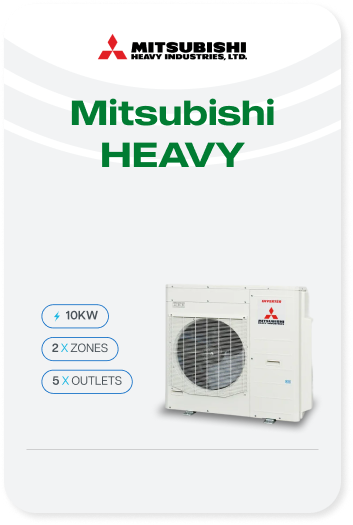
As an authorised Mitsubishi Electric specialist, Paragon offers complete ducted system supply, design, and installation for the Mitsubishi Electric range. Mitsubishi Electric’s ducted systems are particularly well regarded for acoustic performance, delivering whole-home comfort with minimal operating noise.
- Best for: Homes where quiet operation is a priority; buyers looking for a reliable, energy-efficient system with strong acoustic performance
- Capacity range: 5.0kW – 24.5kW
- Zoning: Compatible with Mitsubishi Electric multi-zone controllers
- Warranty: Up to 3 or 5 years
Not sure which system suits your home?
Get Whole-Home Comfort with Ducted Air Conditioning
Not sure which system suits your home? Book a free consultation and our team will size, zone and quote the right ducted system for your property. Call 1300 507 892.
 Shop our cool
specials
Shop our cool
specials
Shop our cool
specials
Shop our cool
specials
Shop our cool
specials
Shop our cool
specials
Shop our cool
specials
Shop our cool
specials
Shop our cool
specials
Shop our cool
specials
Shop our cool
specials
Shop our cool
specials
Shop our cool
specials
Shop our cool
specials
Shop our cool
specials
Shop our cool
specials
Shop our cool
specials
Shop our cool
specials
Shop our cool
specials
Shop our cool
specials
Shop our cool
specials
Shop our cool
specials
Shop our cool
specials
Shop our cool
specials
Authorised dealers of


Reverse Cycle Ducted Air Conditioning
We supply reverse-cycle ducted air conditioning systems from known brands such as Daikin, ActronAir and Mitsubishi. This allows the same unit to cool your home in summer and provide heating in winter. One system, one installation, year-round comfort.
How reverse cycle ducted air conditioning works
A reverse cycle system uses a refrigerant cycle that can run in both directions.
- In cooling mode, it extracts heat from inside your home and expels it outside.
- In heating mode, it extracts heat energy from the outdoor air (even cold air contains heat energy) and moves it inside. This is why it’s called a heat pump: it moves heat rather than generating it.
Zoned Ducted Air Conditioning
A standard ducted system conditions your whole home, but a zoned ducted system lets you decide which parts of your home get conditioned, and when.
How does zoned ducted air conditioning work?
- Each zone corresponds to a room or area of your home (e.g. master bedroom, living room, upstairs)
- A motorised damper inside the duct for each zone opens or closes based on which zones you’ve activated
- A zone controller (usually a wall panel or touchscreen) lets you adjust each zone independently
- You can set different temperatures per zone, or simply turn zones on and off as needed
How many zones do I need?
This depends on how your household actually uses the home, instead of just how many rooms it has.
- 2–3 bedroom homes: 2 to 3 zones is usually enough. A common split is living areas as one zone and bedrooms as another.
- 4–5 bedroom homes: 3 to 5 zones is typical. Upstairs/downstairs splits, or separating the master from minor bedrooms, are common configurations.
- Larger or open-plan homes: Zone counts vary more. An open-plan living, dining and kitchen space usually functions as a single zone despite covering a lot of floor area.
We map zones during the site inspection based on your floor plan and how you live in it. For more detail, learn more about our zoned ducted systems.
What is MyAir zoning?
MyAir is a smart zoning and control system developed by ActronAir for use with compatible ducted systems. It replaces the standard wall controller with a touchscreen panel and smartphone app, giving you full remote control over your ducted system.
- App control: Adjust zones, set temperatures, and turn the system on or off from your phone
- Scheduling: Pre-cool the house before you arrive, or wind down after everyone’s in bed
- Room-by-room management: Each zone shows its current temperature and can be individually adjusted
- Usage tracking: MyAir logs energy usage by zone, so you can see where the system runs hardest
MyAir is compatible with the Neo ducted range and select other systems.
Ducted Air Conditioning for Every Property Type
Ducted air conditioning for houses
A standalone house is the most natural application for a ducted system. A pitched roof provides space for the indoor unit and ductwork, and the floor plan maps cleanly to zones.
For existing homes, we start with a roof cavity assessment to confirm clearance and map duct routing before quoting. For new builds and renovations, early involvement is the better approach: coordinating with your builder before the ceiling is closed means cleaner duct runs and no structural compromises. Learn more about our full residential air conditioning services.
Ducted air conditioning for apartments and strata
Apartments are more complex territory, and the main practical challenge is the ceiling cavity. Many apartments in multi-storey buildings have concrete slab ceilings with no space for ductwork. In those cases a ducted system typically isn’t feasible, and a cassette or split system is the practical alternative.
For lower-density strata properties such as townhouses, villa units and ground-floor apartments with roof access, ducted is sometimes viable.
- Body corporate approval: Most strata schemes require written approval before any work affecting the building’s exterior, roof or common property.
- Noise and placement rules: Some by-laws restrict where outdoor units can be installed.
- By-law review: We can advise on what the installation involves physically, but strata approval is the owner’s responsibility.
Read more about our air conditioning for apartments service.
Ducted air conditioning for new builds and constructions
New builds are where ducted systems perform at their best. When air conditioning is designed into the build from the start, duct runs are shorter and more efficient, the indoor unit sits exactly where it should, and zones are mapped to the floor plan before anything is locked in structurally.
We work with builders, developers and owner-builders across all project scales, from single dwellings to multi-lot developments.
Commercial ducted air conditioning
For offices, retail tenancies, warehouses and mixed-use spaces, ducted systems are often the right call when the ceiling structure allows. Commercial applications involve different capacity requirements and load profiles than residential applications.
We handle commercial air conditioning across Sydney, including ducted installations for fit-outs and tenancy upgrades.
How Much Does Ducted Air Conditioning Cost in Sydney?
For a standard residential ducted system in Sydney, supply and installation costs vary depending on home size, ranging from smaller setups suited to a 3-bedroom home up to larger installations for bigger homes with full zoning and premium ducted systems.
Ultimately, factors that affect the price of ducted air conditioning include:
- Home size and layout
- Number of zones
- System brand and model
- Ductwork complexity
- Roof access and existing infrastructure
Finance Options for Ducted Air Conditioning in Sydney
Finance is available on both residential and commercial ducted installations, so you can get the system you need now and spread the cost over time. Through our finance partner you can borrow up to $15,000 with no fees and up to 10 years to repay.
If you’d like to understand what a monthly repayment looks like for your quote before committing, ask us when you book your site inspection and we’ll run through the numbers with you.
View finance options
Ducted Air Conditioning Servicing and Repairs Sydney
Ducted air conditioning servicing
- Filter inspection and cleaning
- Indoor unit inspection
- Outdoor unit check
- Zone damper and controller test
- Airflow check
- System commissioning check
For more on our ongoing maintenance, see air conditioning servicing.
Ducted air conditioning repairs
- Loss of cooling capacity across all zones
- One zone not responding, stuck open or closed
- AC system not responding to controller inputs
- Duct damage
- Drainage blockages
For air conditioning repairs across Sydney, our team is available on call.

Common ducted AC problems
Why is my ducted air conditioning not cooling?
- Dirty return air filter: A blocked filter is the most common cause of poor cooling. It restricts airflow to the indoor unit and reduces AC efficiency. Check and clean the filter first.
- Zones set incorrectly: If a zone isn’t open or the controller is set to the wrong mode, you may be heating instead of cooling.
- Refrigerant loss: Requires a licensed technician to diagnose and rectify.
- Blocked return air grille: Furniture or curtains placed too close will starve the system.
- Undersized system: If incorrectly sized for your home it will struggle on hot days regardless of condition.
- Duct damage: Air escaping into the roof cavity means rooms don’t cool even when the system is working correctly.
If a filter clean doesn’t resolve it, call 1300 507 892 and we’ll diagnose it properly.
Ducted air conditioning making noise?
A ducted system should be close to silent in the living areas. If you’re hearing noise, here’s what it usually means:
- Rattling or vibrating ducts: Often a loose flex duct connection, a duct touching a structural element, or debris in the ductwork.
- Banging or clunking at startup: Can indicate a loose component in the indoor unit or, in older systems, worn fan bearings.
- Whooshing or whistling at vents: Usually too many zones closed at once, forcing high-velocity air through fewer vents.
- Loud or persistent noise from the outdoor unit: Grinding, rattling or knocking that doesn’t settle warrants a service call.
- Squealing: Usually a fan belt or bearing issue in older systems.
Ducted air conditioning not turning on?
Before calling a technician, run through this checklist:
- Power at the isolator: Check the external isolator switch is in the ON position.
- Circuit breaker: Check your switchboard for a tripped breaker on the AC circuit.
- Controller settings: Confirm the correct mode, that the set temperature is calling for action, and that at least one zone is active.
- Zone settings: If all zones are off, the system may not start.
- Fault code: If a fault code is displayed, check our error codes page before calling.
Don’t attempt to reset it repeatedly: if a fault is present, continued cycling can cause further damage.
How Much Does Ducted Air Conditioning Cost to Run?
Running costs depend on several factors, and a well-set-up system with zoning is often cheaper to run than people expect. They are shaped by how your system was specified, how you use it, and how well it’s maintained.
What affects ducted AC running costs?
- System size (kW capacity)
- Energy Star rating
- Zoning
- Usage patterns
- Home insulation
- System age and condition
Inverter technology and why it matters
A non-inverter system is either on at full power or off, while an inverter system adjusts its output continuously to match what’s needed, running at low capacity to maintain a set temperature rather than switching off and on at full power repeatedly.
The result is more consistent comfort and lower electricity consumption, particularly over a long summer day. Combined with zoning, an inverter ducted system in a well-insulated Sydney home can be cost-effective to run.
Summer vs winter running costs
- Summer cooling: Cooling requires more compressor work than heating in a heat-pump system. Sydney’s hot summers mean longer daily run times during peak season.
- Winter heating: Reverse cycle heating is significantly more efficient than electric resistance heating, producing around 3 to 4 units of heat energy for every 1 unit of electricity consumed.
- Shoulder seasons: Spring and autumn typically require minimal system use, which keeps the annual average manageable.
Tips to reduce ducted AC running costs
- Use zoning properly. Only run the zones that are actually occupied.
- Set a sensible temperature. 24–26 degrees in summer and 20–22 degrees in winter are comfortable ranges for most Sydney households.
- Use scheduling. Pre-cool or pre-heat before peak use rather than running hard to recover from extreme temperatures.
- Keep filters clean. A dirty return air filter chokes airflow.
- Service regularly. A system running at degraded efficiency costs more.
Ducted Air Conditioning Across Sydney
- Inner West
- Hills District
- Canterbury-Bankstown
- Western Suburbs
- North Shore
- Eastern Suburbs
- St George
- Sutherland Shire
- Northern Beaches
- Northern Suburbs
- Sydney CBD
- Macarthur
Check out the areas we service for the complete list of suburbs. If your suburb isn’t listed, call us on 1300 507 892 and we’ll confirm coverage.
Ready to Get Ducted Air Conditioning?
If you’ve done the research and ducted is the right system for your home, the next step is a free site inspection. We’ll assess your roof cavity, talk through your options, and provide a detailed, no-obligation quote. Call 1300 507 892.
Frequently Asked Questions
How long does ducted air conditioning last?
A well-maintained ducted air conditioning system typically lasts 15 to 20 years. Lifespan depends on the quality of the original installation, how often the system is serviced, and how hard it runs. Systems that are regularly serviced and correctly sized for the home consistently outlast those that aren’t.
Can ducted air conditioning heat as well as cool?
Yes. Most ducted systems are reverse cycle, meaning the same unit cools your home in summer and heats it in winter. Reverse-cycle ducted systems are the most common type installed across Sydney, and most systems Paragon supplies are reverse cycle unless otherwise specified.
Do I need council approval to install ducted air conditioning?
In most residential cases in NSW, ducted air conditioning installation does not require council development approval. It is typically treated as exempt development under the State Environmental Planning Policy, provided the outdoor unit placement meets certain noise and setback requirements. You should check your local council’s requirements and any strata by-laws if applicable. Paragon can advise on what’s involved during the site assessment.
Can I add zones to an existing ducted system?
Sometimes, but it depends on what’s already installed. If your existing system uses a compatible zone controller and the ductwork can support additional dampers, adding zones is possible. Older systems or those installed with non-zoning-compatible components may not support it, or may require a controller upgrade. The easiest way to find out is to book a service visit and we’ll assess what’s in place.
Is ducted air conditioning noisy?
Ducted systems are among the quietest options for whole-home air conditioning. The compressor sits in the roof cavity or outside the building, so there’s no fan noise inside the living areas. Airflow through well-designed ductwork is quiet. If you do hear noise from a ducted system, it usually indicates an issue rather than normal operation.
How often should I service my ducted air conditioning?
Paragon recommends servicing your ducted system once a year. An annual service keeps filters clean, checks that all zone dampers are operating correctly, and catches small issues before they become expensive repairs. In homes where the system runs heavily during summer, a pre-season service in spring is worth scheduling before the peak cooling period.
What happens if a zone stops working?
A zone that stops responding is usually caused by a faulty motorised damper, a wiring fault in the zone controller, or a controller board issue. In most cases it’s a straightforward repair. Until it’s fixed, you can continue using other zones normally. Call us and we’ll diagnose it properly.
Can ducted air conditioning be installed without a roof cavity?
Not in the conventional sense. Standard ducted systems require a roof cavity to house the indoor unit and run ductwork to each zone. Homes with flat roofs, skillion roofs, or concrete slab ceilings typically can’t accommodate a ducted system. In those cases, alternatives like cassette air conditioning or split systems are usually the right solution. A site inspection will confirm what’s possible for your specific property.
Is ducted air conditioning suitable for a 2-storey home?
Yes, and in many ways a 2-storey home benefits more from a ducted system than a single-storey. The ability to zone upstairs and downstairs separately means you’re only conditioning the floor that’s in use, which in a typical household is a real efficiency gain. Ductwork routing across two floors is more involved than a single-storey install, and access to the upper-floor ceiling space needs to be assessed, but 2-storey homes are a common and very workable application for ducted systems.